It Wasn’t Democrats Who Persuaded Trump to Change Course
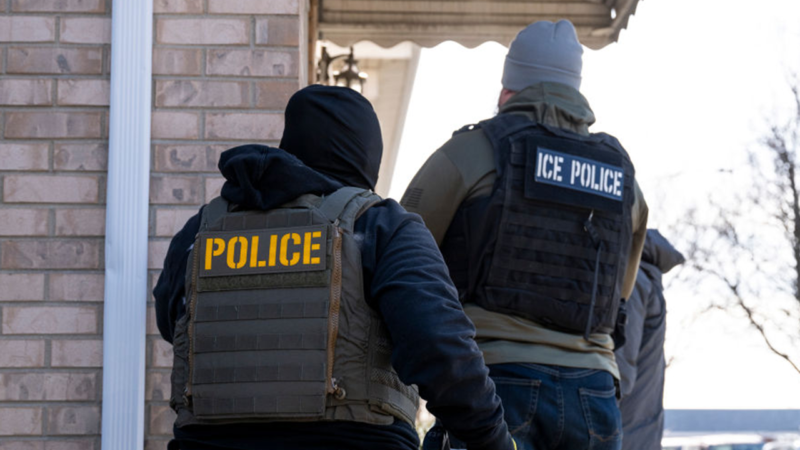
The statements from congressional Republicans after Saturday’s shooting of Alex Pretti were relatively mild. Lawmakers said that they were “deeply troubled” or “disturbed” by the second killing of an American citizen by federal immigration officers this month; most called for an investigation into Pretti’s death. But the statements kept coming, one after another, all through the weekend and into yesterday.
The reactions from across the GOP sent an unmistakable message in their volume, if not in their rhetoric, to Donald Trump: Enough. The defining characteristics of the Republican-controlled Congress during the president’s second term have been silence and acquiescence. That so many in his party felt compelled to speak up after Pretti’s killing was a sign that Republicans had finally lost patience with federal agents occupying a major American city—a deportation operation that has soured the public on one of Trump’s signature policies and sunk the GOP’s standing at the outset of a crucial midterm-election year.
Republican committee chairs in both the House and the Senate summoned top administration officials to public hearings—a rarity in the past year. From the right, the National Rifle Association and other gun-rights advocates criticized comments from senior law-enforcement officials, including FBI Director Kash Patel, that blamed Pretti for carrying a firearm and said that people should not bring guns to public demonstrations. (Videos showed that officers disarmed Pretti before they fatally shot him.) Few Republican leaders rushed to defend the unnamed agent who’d killed Pretti, nor did they echo the rhetoric of Homeland Security Secretary Kristi Noem and Stephen Miller, the White House deputy chief of staff, who referred to Pretti, an ICU nurse, as a “would-be assassin.” In at least one case, the lack of comment from a top Republican was significant: House Speaker Mike Johnson—ordinarily quick to pick up talking points from the president and his top aides—has said nothing about the shooting.
The harshest Republican condemnation came from one of the party’s candidates for governor of Minnesota, Chris Madel, who yesterday declared that he was quitting the race in part because of the federal deployment. “I cannot support the national Republicans’ stated retribution on the citizens of our state,” Madel said in his video announcement, “nor can I count myself a member of a party that would do so.”
Watching all of this unfold was Trump, who already did not like what he saw. For the president, it was a rare winter weekend when he wasn’t in Palm Beach or at the golf course. He never left the White House. And he was glued to news coverage that showed little besides another horrific shooting in Minnesota. Videos of Pretti’s killing were inescapable on TV and social media, and the story broke through to nonpolitical media—drawing reactions from the likes of Charles Barkley and Bill Simmons—in ways that the fatal shooting of Renee Good on January 7 did not.
[Read: Lethal force on a frozen street]
Trump’s first move was to defend the federal officers carrying out the immigration operations in the moments before the deadly clash. He reposted a Department of Homeland Security–supplied photo of the gun Pretti had been carrying, before again making claims about fraud in Minnesota’s immigrant communities. But he otherwise remained publicly silent as more videos of the shooting cast doubt on the administration’s statements about what had happened.
Trump began asking aides and outside advisers if it had been an “okay” shooting, trying to figure out whether the agents had made the right decision to fire, a White House official and two allies close to the West Wing told us. His top aides, among them Miller—including in a post that was amplified by Vice President Vance—immediately blamed Pretti for instigating violence (as the administration blamed Good after her death) and suggested, without evidence, that Pretti had been a “domestic terrorist.”
But this time, fewer Republicans joined the chorus. And as the weekend wore on, more GOP lawmakers and conservative media voices began to call for an investigation into the shooting and to question the administration’s assertion that an armed Pretti had violently resisted agents. Senator John Curtis of Utah called out Noem by name, saying that he disagreed with her “premature” response to the shooting.
Trump grew concerned at the response, the White House official and one outside ally told us. He again on Sunday demanded more cooperation from local officials and blamed Democratic lawmakers for violence in Minnesota—but he noticeably did not defend the officers who’d shot Pretti, in either his posts or in a brief interview with The Wall Street Journal. The president, who has long enjoyed near-total fealty from Republicans, took note of the lawmakers calling for a probe or quietly suggesting that federal officials roll back operations in the Twin Cities. (He was glad that the lawmakers did not blame him personally for the administration’s response, one of the allies told us.)
Trump was particularly bothered by the NRA’s strong reply to an assistant U.S. attorney in California appointed by the administration who said that if a person approaches law enforcement with a gun, there is a “high likelihood” that officers will be “legally justified in shooting you.” Trump has long prided himself on the support he receives from those he calls “my Second Amendment people,” and he has often been deferential to the gun lobby despite its waning influence.
When something becomes too controversial for Trump’s liking—or when the blowback becomes too fierce—he has in many cases a way to declare some sort of victory, even a far-fetched one, and then move on (as he did with Greenland last week). Aides wondered whether he was trying to do the same with Minneapolis. Yesterday, Trump appointed his designated “border czar,” Tom Homan, to head the federal operation in Minnesota. Although most Democrats are deeply skeptical of Homan, he has not been involved in the Twin Cities operations and has been more consistently careful with his language than Miller or Noem. (After Good’s killing, Homan said that he would reserve judgment on the matter until an investigation had concluded.) Trump later claimed, after a phone call, that he and Minnesota Governor Tim Walz are largely aligned in their goals for the federal operation—and even offered some faint praise for the governor, who is under investigation by the Department of Justice for allegedly impeding the operation of immigration agents.
White House Press Secretary Karoline Leavitt said yesterday that if local officials increased their cooperation with the federal government, Border Patrol agents would “no longer be needed to support ICE on the ground in Minnesota.” The administration decided to pull some federal agents out of Minnesota, aides said, but did not suggest a sweeping overhaul to the mission in the state or to Trump’s broader immigration agenda.
Trump’s unease, along with pushback from Republicans, grew by the hour and forced a major change: As The Atlantic’s Nick Miroff first reported, the administration yesterday ousted Gregory Bovino from his role as the Border Patrol’s “commander at large” and removed him from Minnesota, where he had become the public face of the federal operation. Many in Trump’s orbit saw Bovino as an easy scapegoat; he’d claimed, without evidence, that Pretti had planned to attack federal agents. (His choice of coat and interactions with Minnesotans in social-media posts had also generated an uproar.) Despite this, a senior administration official insisted that Bovino’s transfer had been in the works before the announcement of Homan’s new role. Not all of Trump’s allies were happy with the change in Minneapolis. “You can’t sugarcoat this,” the Trump ally Steve Bannon said on his podcast. “It wasn’t just a blink. It was a crater.”
[Read: Greg Bovino loses his job]
Last night, the president met for two hours in the Oval Office with Noem and one of her top advisers, the former Trump-campaign chief Corey Lewandowski, but the senior official made clear to us that no additional leadership changes are imminent. Leavitt, in her briefing, also said that Trump continues to have confidence in Noem. For the moment, she remains at her job.
Marie-Rose Sheinerman and Isabel Ruehl contributed reporting.