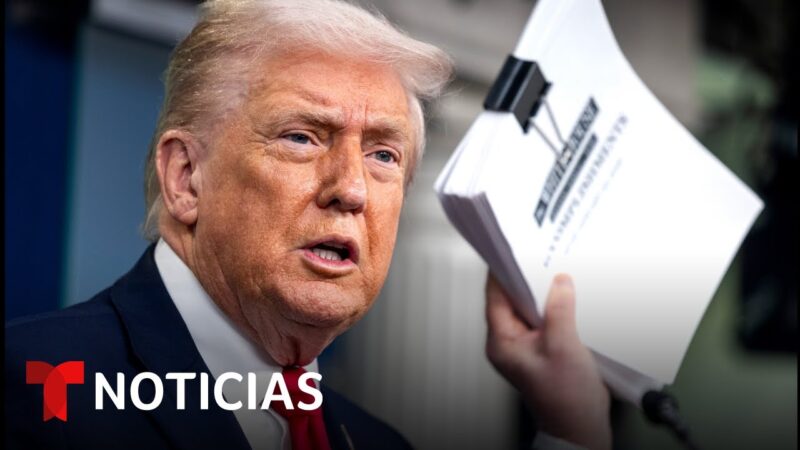
US energy stocks rise as Trump vows to unlock Venezuela oil | Oil


US energy stocks surged in pre-market trading on Monday, as Donald Trump pledged to unlock Venezuela’s vast crude oil reserves after the US capture of the country’s president, Nicolás Maduro.

Shares in Chevron, which already operates in Venezuela under a special licence provided by the Trump administration, were up 7% in pre-market trading. Exxon Mobil was up 3.7%, while Halliburton, which provides products and services to the oil and gas sector, jumped by as much as 9%.

Oil prices were up slightly on Monday, after recovering from a brief drop. Brent crude, the international oil benchmark, traded at $61.16 a barrel. West Texas Intermediate was roughly flat at $57.72.

Venezuela produces only about 1% of global oil output, after years of underinvestment, US trade sanctions and a naval blockade. However, the country holds about 17% of global crude oil reserves, according to the US Energy Information Administration.

Trump’s intervention could deepen a supply glut in the market, as the president has promised that US oil companies will “go in, spend billions of dollars, fix the badly broken infrastructure, the oil infrastructure, and start making money for the country”.

So far none of the biggest US oil companies have spoken about the president’s claim they are prepared to spend billions to rebuild the Venezuelan oil industry. However, a former top Chevron executive, Ali Moshiri, said he was raising $2bn (£1.49bn) for Venezuelan oil projects.

Moshiri, who was formerly head of Chevron’s Latin American operations, told the Financial Times that his Amos Global Energy Management fund had identified Venezuelan assets and was preparing to make an investment. “We have been anticipating this breakthrough for a while and our $2bn private placement memorandum is ready to go with several investment targets identified,” he said.

Kathleen Brooks, the research director at XTB, said a fall in oil prices could be “short-lived” as investors assessed how long it would take for extra Venezuelan oil to affect the global market. She said: “The type of investments needed include upgrading old and decaying infrastructure, drilling new oil wells and building more refineries to process Venezuela’s heavy crude oil.

“Optimising resource-rich Venezuela to generate the income needed to turn the country around could take until 2030 and beyond.”

Brooks noted that the country pumped nearly 3.5m barrels a day at its 1998 peak, far exceeding the 1m a day now.

The El Palito refinery above Puerto Cabello. Reviving Venezuela’s oil production would be ‘a very long-term project’, said the former BP cheif executive John Browne. Photograph: Matias Delacroix/AP

John Browne, a former chief executive of BP, told BBC Radio 4’s Today programme it would take a “tremendous amount of skill, investment and time” to revive Venezuela’s oil production. “It is a very long-term project,” he said. “It might get a quick pickup of a little production, but equally it might go backwards while people are reorganising.”

The political disruption has also prompted a rally in the Venezuelan bond market. Its debt, which has traded well below its face value since the country defaulted in 2017, has been rising in recent weeks as some traders anticipated a regime change.

A Venezuelan government bond that matures in 2027 has jumped in price from 31.5p on the dollar to more than 40p on the dollar, according to data from Deutsche Börse. A second bond that should have been repaid in 2022 has risen from 31.5p to 34p.

China’s top financial regulator, the National Financial Regulatory Administration, has asked its policy banks and other big lenders to report their exposure to Venezuela, according to Bloomberg, as the Chinese banking sector prepares for potential shocks.

Despite the geopolitical upheaval over the weekend, the Opec+ oil group did not signal a shift in strategy at a scheduled update on Sunday. The group, which includes Russia, Saudi Arabia and the United Arab Emirates, agreed to maintain their pause on production increases until at least April.

The price of gold rose by 2% to $4,430.27 an ounce on Monday. The metal is considered a traditional safe haven asset, and typically rises during periods of uncertainty. Silver also rose by as much as 3.9% to $75.42 an ounce. Both metals hit record high prices last year, driven by global economic and political uncertainty, as well as expectations around interest rate cuts and large purchases of bullion by central banks.

The price of bitcoin has also been rising on geopolitical uncertainty, increasing by 1.7% to $93,085 on Monday.

Asian markets were buoyant, posting their strongest start to a year since 2012. The South Korean Kospi index hit a fresh record high, rising by 3%. In London, the FTSE 100 opened back above 10,000 – after breaking the mark for the first time last week – before easing to trade up 0.2%.


Source link

Leave a Reply

Your email address will not be published. Required fields are marked *