Trump Accounts Could Improve Young People’s View of Capitalism
For babies born in the next few years, “Trump accounts” could be a financial game changer.
And for the policymakers and advocates who conceived of the idea, the accounts have another potential benefit: Improving capitalism’s reputation, especially among young people.
“What I’m really excited about is, we are creating a new generation of capitalists,” Republican Sen. Ted Cruz of Texas said at the White House on Tuesday. “Every child in America is going to be an owner of the biggest employers in this country.”
It’s no secret that capitalism is losing popularity. A Gallup poll found in September that support for capitalism had fallen to a 15-year low.
That’s especially true among younger people. According to that same poll, 49% of young adults surveyed held a positive view of socialism, while 54% had a negative view of capitalism.
Meanwhile, Democratic socialist politicians have seen their influence in American politics grow over the last decade, most recently with the election of Mayor-elect Zohran Mamdani in New York City.
Trump administration officials and other GOP proponents of the new investment accounts are hoping that giving children a piece of the stock market can help reverse that sentiment.
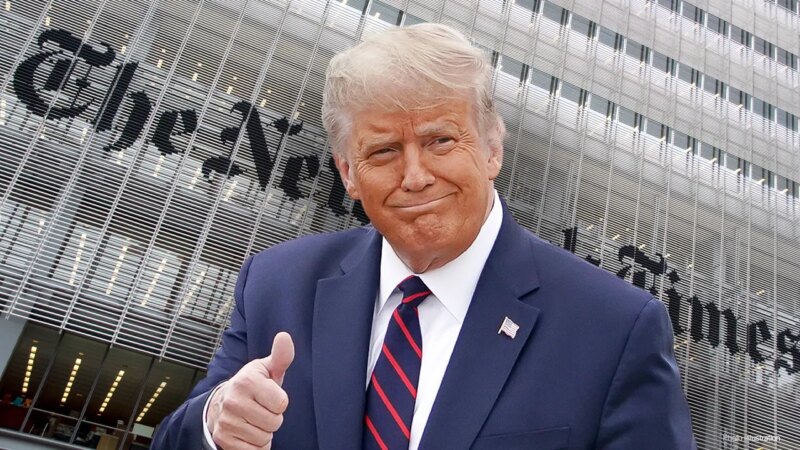
“When you see that people have a stake in the system, they don’t want to bring the system down,” Treasury Secretary Scott Bessent said at the New York Times DealBook Summit on Wednesday.
“We’ve all seen the sad statistics of how many kids are losing faith in capitalism,” Cruz said. “Well, 10 years from now, a little boy is going to pull out his phone, and he’s going to look at his app, and he’s going to see his Trump account.”
With Trump accounts, children are invested in the stock market
Trump accounts are set to be rolled out next year, after they were approved by Congress via the “Big Beautiful Bill.”
Under the plan, parents can set up the accounts for children who are US citizens under the age of 18, and under a temporary pilot program, every child born between January 1, 2025 and December 31, 2028 will receive $1,000 from the federal government.
And for children under age 10 who were born before 2025 and live in zip codes where the median income is $150,000 or less, Michael and Susan Dell will contribute $250 — a total charitable contribution of $6.25 billion.
Parents and employers can also make their own contributions to the account, starting on July 4, 2026. The annual limit for parents and other individuals is $5,000, while employers can contribute up to $2,500.
All of that money is invested in mutual funds and ETFs that track the S&P 500 other other similar indexes, meaning each Trump account holder is invested in a broad array of companies.
Those funds can’t be withdrawn from the account until the year that the child turns 18.
‘This is moving us back towards a system that more people can participate in’
The accounts have garnered a mixed reaction from Democrats.
Sen. Ruben Gallego of Arizona said in a video on X this week that the accounts are “something that Democrats have been talking about for a long time.”
“The only thing I really liked about the Big, Beautiful, quote-unquote Bill, was that,” Gallego said, adding that he wants to make the $1,000 contribution program permanent.
The plan also bears a resemblance to a baby bonds plan that Sen. Cory Booker of New Jersey and Rep. Ayanna Pressley of Massachusetts have been promoting for several years.
Under that plan, every American child would receive a savings account seeded with $1,000, while lower-income Americans would receive additional federal payments of up to $2,000 per year into their accounts.
Booker has largely embraced Trump accounts, co-leading a letter with Cruz this week encouraging Fortune 1000 CEOs to contribute to Trump accounts.
“I believe that we should have more Americans that are invested in the vehicles that produce wealth,” Booker told Business Insider on Wednesday. “It would only have a multiplier effect for our overall economic strength.”
Pressley, on the other hand, has argued that Trump accounts are insufficient and will worsen wealth inequality, given the fact that the $1,000 pilot program is temporary and there are no additional contributions from the federal government.
“Under this new law, kids born into rich families will disproportionately benefit from Trump Accounts while others will continue to struggle,” Pressley wrote in a letter to Treasury Secretary Scott Bessent in November.
As for the notion that Trump accounts will shore up support for capitalism, Booker said that although he believes capitalism has become warped by the concentration of wealth in recent decades, he sees the accounts as a way of allowing more Americans to participate in the system.
“The moral philosophy of Adam Smith that has been fundamental to create generational wealth in my grandparents’ era, my parents’ era, is something I really believe in,” Booker said. “This is moving us back towards a system that more people can participate in, and more people can develop wealth in.”