Trump’s assault on the Smithsonian: ‘The goal is to reframe the entire culture of the US’ | US news
On 30 May last year, Kim Sajet was working in her office in the grandly porticoed National Portrait Gallery in Washington DC. The gallery is one of the most important branches of the Smithsonian Institution, the complex of national museums that, for almost 200 years, has told the story of the nation. The director’s suite, large enough to host a small party, has a grandeur befitting the museum’s role as the keeper of portraits of the United States’ most significant historical figures. Sajet was working beneath the gaze of artworks from the collection, including a striking 1952 painting of Mary Mills, a military-uniformed, African American nurse, and a bronze head of jazz and blues singer Ethel Waters.
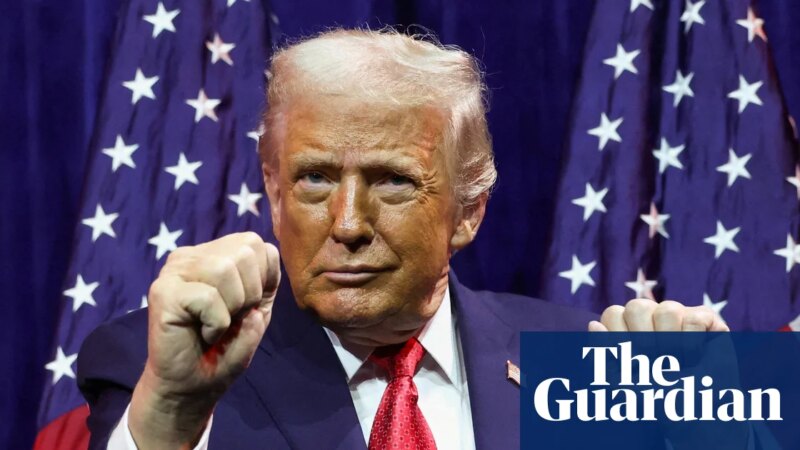
It seemed like an ordinary Friday. Until, that is, an anxious colleague came in to tell Sajet that the president of the United States had personally denounced her on social media. “Upon the request and recommendation of many people I am herby [sic] terminating the employment of Kim Sajet as Director of the National Portrait Gallery,” Donald Trump had posted on Truth Social. According to the post, Sajet was “a highly partisan person” and a “strong supporter” of diversity and inclusion programmes, which by an executive order on his inauguration day, 20 January, he had eradicated from federal agencies. “Her replacement will be named shortly,” continued the message. “Thank you for your attention to this matter!”
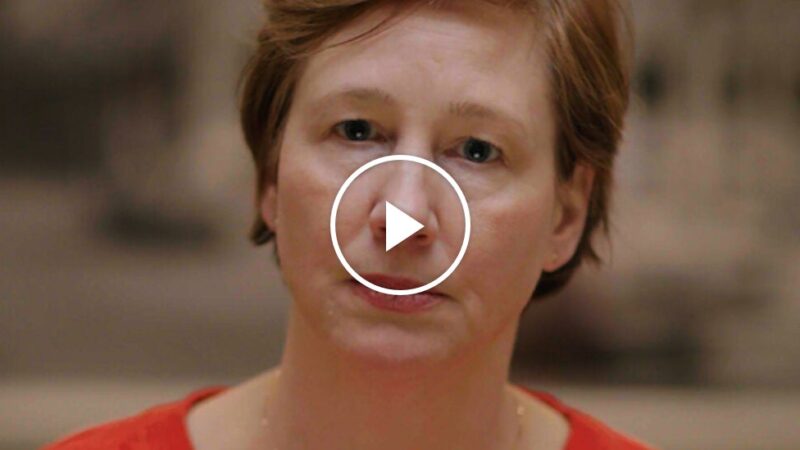
Sajet is a Dutch-born, Australian-raised art historian in her early 60s. She has platinum blond hair, and wears trouser suits in bright colours and statement spectacles. Her manner is warm and open, but she also projects an air of professional control. When we met in autumn 2025, she seemed so determined not to say anything controversial that I struggled to believe that anyone could consider her radical. She recalled that, after absorbing Trump’s post, she shot a look at her shaken colleague, and asked: “Are you OK?”
“It honestly was another day in the office,” Sajet told me. “Truly, I don’t think people realise that as soon as you become a director at the Smithsonian, you are a public figure.” In the 12 years she had been running the museum, members of Congress were constantly questioning displays, she said. A disgruntled painter whose portrait of Trump she had refused to put on display – because, she said, the work was of insufficient quality – had pursued her through the courts for years.
But surely, I asked, the president personally firing her on social media was something else? She shrugged, her tough outer coating intact. “I think we can all agree we live in unusual times,” she said.
It had, perhaps, been only a matter of time before Trump targeted a senior figure from the Smithsonian Institution. In February, Trump had declared himself, despite having no authority to do so, chair of the Kennedy Center, the US’s national centre for the performing arts, and vowed to end “woke” programming – a prelude, it turned out, to actually renaming the organisation after himself, with workmen adding his name, in slightly mismatching type, above that of Kennedy’s on the building’s facade this Christmas. At the national museums, there had been some hope his attention to the arts might peter out there. After all, the Smithsonian, as well as the National Gallery of Art, a separate body, had pre-emptively shut down their diversity offices soon after Trump’s executive order, despite not themselves being federal agencies.
But on 27 March an executive order was published, claiming that the Smithsonian had “come under the influence of a divisive, race-centred ideology” that “promoted narratives that portray American and western values as inherently harmful and oppressive”. The person assigned with removing this “improper ideology”, along with the vice-president, JD Vance, was Lindsey Halligan, a Trump aide in her mid-30s who had previously worked as an insurance attorney and had no experience in the arts. The executive order was titled Restoring Truth and Sanity to American History.
On 30 May, as soon as she heard of the Truth Social post, Sajet spoke to her boss, Lonnie Bunch III, the secretary of the Smithsonian Institution, who had previously been founding director of its National Museum of African American History and Culture. “We very quickly said: ‘The president of the United States does not have the jurisdiction to fire a director at the Smithsonian,’” Sajet recalled. That power lay with Bunch himself, overseen by the Smithsonian’s board of regents, a traditionally non-partisan group composed of members of Congress and members of the public, plus the vice-president and the chief justice. “I just kept on working,” Sajet said.
The next working day after Trump’s post, Monday 2 June, an emergency meeting of the Smithsonian’s board of regents was held. By the end, Sajet still had her job. A week later, on Monday 9 June, there was a second board meeting. Afterwards, the Smithsonian published a statement affirming that decisions on hiring and firing lay with Bunch. (This was despite the fact, according to people familiar with the meetings, that the vice-president, Vance, had personally called for Sajet’s head.) As a concession to the administration, the Smithsonian announced that Bunch would also take measures to ensure “unbiased content” in the museums, and report back to the board on “any needed personnel changes”.
Sajet kept off social media, avoiding the threatening messages from Trump’s base that friends told her were amassing. She lasted until Thursday 12 June. In the end, she decided she should try to defuse what she feared could turn into a larger, more resolute attack on the museum. “It just became fairly obvious that the story wasn’t going to change,” she told me. “So I thought, ‘I’m just going to take control of this, and step outside of the maelstrom.’”
In short, the president had ended up getting what he wanted – without a jot of authority to do so. As for Sajet’s supposed partisan position, her adherence to the loathed ideology of diversity and inclusion? Sajet’s mission had been, she told me, to ensure that Americans would be able to see portraits of people like themselves. Gradually, she made sure more women, more minorities, more Black people were represented on its walls. “It was just recognising that people had been knocked out of the national story, so let’s put them back in,” she said. “It wasn’t terribly revolutionary.”
In a smoothly run liberal democracy, it is easy to imagine that the arts and culture are distractions unworthy of serious political attention. But as the culture wars have intensified over the past decade or so, and as politics has become less stable across the globe, that view has been harder to sustain. It is certainly not a view shared by Trump and his circle. On 19 August, the president gave the fullest articulation yet of his position. “The Museums throughout Washington, but all over the Country are,” he asserted on social media, “the last remaining segment of ‘WOKE.’”
He continued: “The Smithsonian is OUT OF CONTROL, where everything discussed is how horrible our Country is, how bad Slavery was, and how unaccomplished the downtrodden have been – Nothing about Success, nothing about Brightness, nothing about the Future.” He added: “I have instructed my attorneys to go through the Museums, and start the exact same process that has been done with Colleges and Universities where tremendous progress has been made.”
To use different language, Trump wanted museums to reflect a Maga vision of American history that was nationalist and triumphalist, and downplayed reflection on darker aspects of its past, specifically its history of slavery. His views were of a piece with his other, smaller, forays into the cultural arena – his desire, for example, to build a triumphal arch in Washington, or his personal role in vetoing what were regarded as “woke” artists from becoming Kennedy Center honourees.
Whereas the first Trump administration left cultural matters largely alone, in his second term it has made them a priority. Through lawsuits and executive orders, threats and intimidation, the administration is seeking to shift the country to the right, an abrupt and extreme escalation in the long battle for control over the narrative of American history fought by both the right and the left. To do so, he is targeting the institutions – universities and museums – that form people’s minds and imaginations, their sense of identity. “The goal,” as one senior employee of the Smithsonian told me, “is to reframe the entire culture of the United States from the foundation up.”
“In Trump 1.0, the systems that held everything together were still working,” said Gus Casely-Hayford, the former director of the Smithsonian’s National Museum of African Art, now at the V&A East in London. “But those systems were not stitched together by anything more robust than culture, practice and belief. No one thought that anyone would unravel that, but so much of what the Smithsonian does tends towards what it means to be American.” And what it means to be American, it seems, is up for grabs as never before.
The Smithsonian Institution is particularly vulnerable to Trump’s attentions. As a collection of national museums, with members of Congress and the vice-president on the board, it is physically close to the great centres of power in DC. It also occupies a unique status among US museums in that it is about 60% federally funded. As such, its aim is to be politically unbiased, though any follower of the BBC will know that impartiality is a moving target. This special status puts it in contrast to the country’s other great museums – for example the Metropolitan Museum of Art in New York, the Art Institute of Chicago, the Getty in Los Angeles – which are privately funded through philanthropy and endowments, and so at one remove from the government. Intimidation is one weapon an administration can use against the Smithsonian; funding is another. Already, the Smithsonian is anticipating a budget cut of $131.2m in 2026.
There is one potential weapon, however, that the Trump administration might try to use against private museums. Many of them, along with charitable foundations and universities, have tax-exempt status, which Trump could threaten to remove. Glenn D Lowry, who recently retired as director of the Museum of Modern Art, New York, after 30 years, believes this may be coming. “Theoretically they can’t do it,” Lowry told me. “But the mere threat acts as a form of pressure. Institutions might start to self-censor, and that is a very real risk.”
The Baltimore Museum of Art is an elegant Greek temple of a building that gazes steadily over its majority-Black, deeply segregated city. It stands on the fringes of a park that, until 2017, held a statue of a pair of confederate generals, now an empty plinth. On a weekday morning in November, the museum was full of bustle. A few visitors were drawn to its stellar collection of Matisses, but more, that day, were there to see an exhibition by Amy Sherald, the artist who, in 2018, had become famous for her painting of Michelle Obama dressed in a sweeping, geometrically patterned evening gown, which was commissioned to hang in Washington’s National Portrait Gallery.
The show was full of of people clustering round Sherald’s striking, larger-than-life paintings of Black subjects to whom she had accorded the grandeur of heroic figures of 19th-century history paintings. Sherald had attended art school in Baltimore, and the exhibition, American Sublime, had the feel of a homecoming. But it had never been intended this way. At the end of July, two months before it was due to open, Sherald had withdrawn the exhibition abruptly from its intended home at the National Portrait Gallery in DC, over fears that her work was being censored – not by the Trump administration, but by the Smithsonian itself.
By the time Sherald’s decision became public, on 24 July, Sajet had been gone from the portrait gallery over a month. In a statement, Sherald explained that she had decided to pull the entire show after she had heard of disquieting discussions at the central HQ of the Smithsonian – “the castle”, as it is known – over one painting. The work in question is a portrait, titled Trans Forming Liberty, of a trans woman in the triumphant pose of the Statue of Liberty. Sherald told the New York Times she had discovered there was an internal discussion about either replacing the painting with, or contextualising it by, a video of people reacting to the work. The discussion, she had gleaned, was prompted by fears that the portrait would attract adverse attention because trans people are such a frequent target for Trump’s circle. “The video would have opened up for debate the value of trans visibility,” Sherald said, “and I was opposed to that being a part of the American Sublime narrative.”
Tracking self-censorship is difficult. Often it operates in subtle ways – the removal of a word in a label here, the discreet pulling of a display that never got publicly announced there. One DC museums professional told me that they had been informed that “anything relating to trans life, or even acknowledging trans life, is going to need extra layers of review”. Another told me their institution had removed the phrase “social justice” from a wall text as a way of softening the way a particular artist (a socialist, anti-racist figure) was presented. In another context, references to the Dutch empire’s involvement in enslavement was discouraged from the labels on a display of Dutch landscapes.
“People are acquiescing in advance as a way to stay under the radar,” said Steven Nelson, who recently stepped down from a senior position at the National Gallery of Art. “Very quickly, things that would not have been considered DEI began being considered DEI, which was almost anything not white.” No one currently in post at the Smithsonian or the National Gallery of Art spoke to me on the record about such matters, fearing for their jobs and for those of their colleagues. The less attention from the White House, the better. “Don’t poke at it,” was the phrase one museum director used.
Some staff at the Smithsonian told me that the institution was being overly cautious. One person told me that a proposed label for a recent exhibition had referred to the “unjust” incarceration of Japanese Americans during the second world war. The central Smithsonian had asked for the word to be changed, because it could seem partisan. “America hardly ever apologises for anything, and it almost never gives reparations,” the person involved told me, “except for this event, this example in our history where we said sorry, and that apology came with money.” It was obvious to them that “unjust” was a fair summary of events, but the review demanded a wordier formulation. The drip-drip of such seemingly small adjustments sat uncomfortably with their personal ethics, “changing the language around this thing, not mentioning this thing – it is a question of small moral injuries”.
At times, the self-censorship approaches dark comedy. One Smithsonian employee had removed the word “diversity” from texts and replaced it with the synonym “variety”. Diversity, after all, was a word guaranteed to provoke the ire of the Trump circle because of its association with DEI programmes. But in this particular case, “diversity” was being used in a strictly scientific context: the “diversity” of astronomical objects. Nevertheless, the employee was anxious about the word’s potentially snagging on any search engines through which the administration might run museum texts. Better, all round, to deflect the gaze.
For some, the self-censorship – what some might call anticipatory obedience – is becoming increasingly frustrating. “I think courage is contagious,” one curator told me. “If a big institution like the Smithsonian, which has so much influence and power, were seen to be taking a stand, I think other institutions would. But the way that it gets communicated to the staff is like, ‘Well, if the CIA and the FBI can’t stand up to Trump, what can we do?’” Nelson put it even more bluntly: “The administration don’t really have to do anything, because institutions are doing it all for them.”
In Washington DC this autumn, life often seemed normal. Restaurants and bars were bustling, streets were pounded by purposeful-looking people on official business. But every so often, one would glimpse something very different: soldiers clustered on street corners, in metro stations, even in shops. These were members of the National Guard deployed to support the efforts of the Immigration and Customs Enforcement agency (ICE). Between January and the end of July, ICE arrested 88 people in DC. But then, from 1 August to the end of October, that number leapt to 1,147. “You could be walking your dog. And suddenly, black cars pull up and people mug some kid on a moped who’s delivering somebody’s dinner,” said one Smithsonian employee. “They pummel him or her to the ground, put their feet on their neck, put them in a black SUV, drive away, leave the moped there, leave the food on the sidewalk, and the neighbours walk out and see what they can do. It happens in other countries. Now it’s happening here.”
The sense of life going on while at the same time, on another level, life had become disordered and frightening, was also true at the Smithsonian. On one level, an employee told me, nothing much had actually “happened”. Those with long memories pointed to the great Smithsonian scandals of the past, such as a 1990s show about the Enola Gay, the plane that dropped the atomic bomb on Hiroshima. After noisy accusations of an anti-American bias, the show was substantially altered, and the director of the National Air and Space Museum resigned. No scandal, optimists pointed out, had yet occurred on that scale.
This winter, the museums were still busy with visitors – at least, after the autumn’s long government shutdown ended. The Museum of African American History, the institution Lonnie Bunch had established, was hosting throngs of visitors, many of them Black Americans making the pilgrimage to absorb an unvarnished account of the cruelty and racism that was so central to their country’s history. One of its most moving artefacts is a chunk of iron ballast used in 18th-century slave ships to counterbalance the human cargo.
Behind the scenes, though, a tense standoff was continuing between the Trump administration and the “castle”. In his 2019 memoir, Bunch had been frank about his awkward encounters with the president. He recounts giving Trump a tour of the National Museum of African American History and Culture, which opened in his first term. Before the president arrived, aides informed Bunch that he was “in a foul mood and that he did not want to see anything ‘difficult’”. Bunch decided to begin with the slavery section nevertheless, since “it was not my job to make the rough edges of history smooth, even for the president”. In a section on how nations such as Portugal, Britain and the Netherlands profited from the slave trade, Trump paused and studied a label. “I felt that maybe he was paying attention to the work of the museum,” writes Bunch. “He quickly proved me wrong. As he turned from the display, he said to me, ‘You know, they love me in the Netherlands.’ All I could say was let’s continue walking.”
On 12 August, three weeks after Amy Sherald’s withdrawal of her show in DC, Lindsey Halligan and two other Trump aides wrote to Bunch. The letter began amiably enough, thanking him for a tour of some of the museums, but then announced that they would be leading a review of the institution. It would initially be focused on eight museums, including the Museum of American History, the Museum of African American History, the National Portrait Gallery and the American Art Museum – those, in short, most concerned with the country’s identity and self-image.
For this, institutions would be required to provide, within 75 days, an ocean of information: exhibition outlines, texts of labels, exhibition catalogues, budgets, staff manuals, organisational charts, inventory of all holdings, educational resources, grant applications. Within 120 days, the letter continued, museums should begin implementing “content corrections”, replacing “divisive or ideologically driven language”. A “revitalised” curatorial vision should be rooted in the “strength, breadth, and achievements of the American story”. The institution would, in short, begin to focus on what it called “Americanism”.
A week later Trump published his long post about how museums were the “last remaining segment of woke”. Two days after that, the White House put out an article headlined “President Trump Is Right About the Smithsonian”, detailing exhibits and texts regarded as objectionable, from a painting of a refugee family crossing the wall at the Mexican border, to an animation illustrating the career of physician Anthony Fauci, to a wall text that described the founding of the US as “a profound unsettling of the continent”.
Then, on 28 August, Bunch was summoned to the White House for lunch with Trump and Halligan. Afterwards, Bunch insisted in a letter to staff that the review of the institution would in fact be conducted by its own staff – a grasping-back of the Smithsonian’s independence – though information would be shared with the White House. He also addressed an anxious all-staff meeting held at the auditorium of the Museum of African American History. The message was, according to a staffer who was there: carry on with your work, keep doing what you do.
These days, Kim Sajet is in Wisconsin. Soon after she resigned from the National Portrait Gallery, she was approached by the Milwaukee Art Museum to become its new director. The museum, located on the shores of Lake Michigan, is a spectacular ensemble of buildings: some by the Finnish architect Eero Saarinen in modernist concrete; some by the Spaniard Santiago Calatrava in the fantastical form of a giant bird, whose soaring wings are now a symbol of the city.
We met a few weeks after Sajet had begun work there, in her new office – several degrees less grand than her previous perch in DC. “I’m still getting my head around the collection,” she said, of the museum’s eclectic holdings, which range from paintings by Georgia O’Keeffe and Agnes Martin to an Egyptian mummy, and one of the US’s most significant collections of Haitian art.
Sajet told me she was loving Milwaukee, with its green spaces and lakefront walks, and was excited about running an institution that could exist at the centre of its local community. Privately funded, the museum is far away from the baleful gaze of Trump. When I asked whether she still feels she could be targeted, she said: “I don’t know. I mean, it could happen, right? I mean, I’m still a pretty visible symbol, whatever. Who knows what’s around the corner. But you just can’t live like that.”
Ninety miles or so down the coast of the lake, in the Democratic stronghold of Chicago, Trump’s shadow had fallen far less darkly over its museums than in Washington, and, when I visited, protesters were gathering in force against ICE and its raids. The Museum of Contemporary Art had an exhibition about histories of queer culture in the city, and a featured image on its website was a sculpture by the African American artist Arthur Jafa, based on a famous 1863 photo of an enslaved man with horrific scars on his back. (Reproductions of the photograph had reportedly been ordered to be removed from national parks by the Trump administration.) At the Art Institute of Chicago, one of the great American museums, curator Sarah Kelly Oehler showed me the galleries of 20th-century American art she had recently rehung. “I think of myself in a trajectory of 150 years of curators,” she said. Hers was a pluralistic vision of modernism, with more work by female artists and artists of colour than in the past – an interpretation that would have looked alien to the visitors of 50 years ago. “My job is to offer historical information,” she said. “We have a very diverse audience in Chicago, and we have a responsibility to them. If we want to offer a place of respite and inspiration to them, we have to think about who these people are.”
Back in DC, one museum director told me they were feeling calm – readier, than in the spring, for assaults by the administration. They knew what they would do if they were hauled up in front of a hostile congressional hearing, as were the presidents of Columbia and Harvard last year. They had scenarios mapped out, “like a crime board”. Lonnie Bunch, in the meantime, is holding a delicate line. On 18 December, a new letter from the White House arrived for him. The Smithsonian had fallen short in providing the information requested on 12 August, it said. “We wish to be assured,” it continued, “that none of the leadership of the Smithsonian museums is confused about the fact that the United States has been among the greatest forces for good in the history of the world. The American people will have no patience for any museum that is diffident about America’s founding or otherwise uncomfortable conveying a positive view of American history.” Then came the threat. “As you may know, funds apportioned for the Smithsonian Institution are only available for use in a manner consistent with Executive Order 14253, ‘Restoring Truth and Sanity to American History,’ and the fulfilment of the requests set forth in our August 12, 2025 letter.”
Bunch wrote a note to all his staff the following day, quietly affirming, once more, the organisation’s autonomy. “For nearly 180 years, the Smithsonian has served our country as an independent and nonpartisan institution committed to its mission – the increase and diffusion of knowledge – for all Americans. As we all know, all content, programming, and curatorial decisions are made by the Smithsonian.”
With JD Vance on the board of regents, along with Republican members of Congress, the question hovers: how long will 73-year-old Bunch survive in his position? “Lonnie knows his time is short,” one DC museum director told me. “It’s a question of how he decides to go, and of which hill he chooses to die on.”