Venezuela condemns ‘warmongering threats’ as Trump orders oil blockade – US politics live | Trump administration
Venezuela condemns ‘warmongering threats’ as Trump orders oil blockade
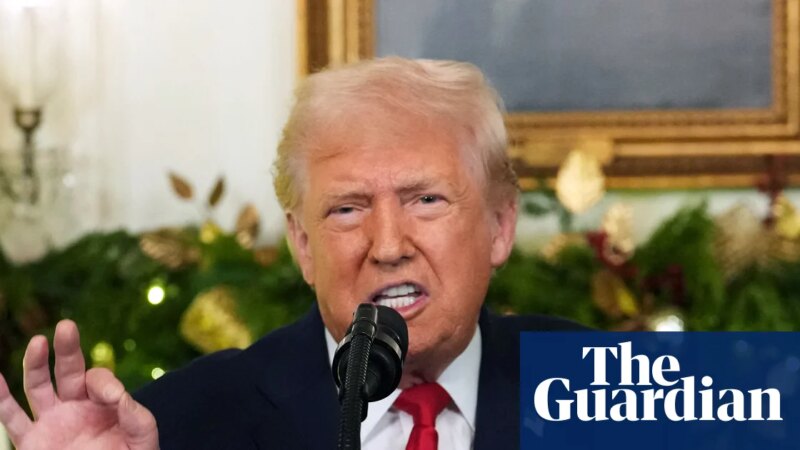
Trump in his Truth Social message didn’t have any detail on how a blockade on sanctioned oil tankers might be enforced, or if he would direct the coast guard to seize vessels like he did last week.
His administration has moved thousands of troops and nearly a dozen warships – including the world’s largest aircraft carrier – to the sea north of Venezuela in the past couple of weeks.
It’s clear the move targeting oil, Venezuela’s main source of income, is aimed at further squeezing Nicolás Maduro’s government.
Venezuela affirmed its sovereignty over all natural resources and its right to free navigation and trade in the Caribbean Sea despite “warmongering threats”, the government said in a statement on Tuesday. It condemned Trump’s “irrational military blockade” order as a “grotesque threat” aimed at “stealing” the country’s wealth.
Key events
Fani Willis, who unsuccessfully prosecuted Trump, faces off with Georgia lawmakers

George Chidi
Fulton County district attorney Fani Willis is testifying before a Georgia Senate committee at the state Capitol in Atlanta this morning about her expenditures related to the Trump investigation, and came out firing.
“I doubt that anyone will have trouble hearing me,” she said when asked to move closer to the microphone by senator Greg Dolezal.
She described herself as a “murder prosecutor” and cited a long career in the law and general success in her office when asked for her background, noting a 30 percent decrease in the murder rate since taking office. “Best to ever do it,” she said of her tenure so far in Fulton County. “I sit here with a 92 percent conviction rate.”
Dolezal, leading the initial questions, began by asking about the transition team and interviews about hiring and firing attorneys after taking office. Dolezal asked specific questions about the role of Nathan Wade in the process of hiring and in the anticorruption department. A personal relationship between Wade and Willis ultimately derailed the prosecution of Donald Trump.
“He was a special prosecutor. He did not work for me as an employee … What I would call him is a lawyer with a distinguished resume,” she said.
Willis said in testimony that she didn’t trust Dolezal, and questioned state support for district attorney’s offices. “If you want to look at some legislation, you should look at paying DAs across this country more money because they do not make enough money and it is very hard for people to recruit DAs at the state pay.”
“I had no idea that these criminals were going to commit a crime,” Willis said of her early days in office in 2021. “I was unable to look for talent for a case that didn’t exist.”
“I was already district attorney when this all came to light … when Raffensberger went on Good Morning America or whatever … I know that you’ve got black people confused and saying that I was running on prosecuting Donald Trump … that is a lie,” Willis said, referring to Georgia secretary of state Brad Raffensperger.
Dissident Republicans force House vote on Democratic bill to extend ACA subsidies
In a major setback from speaker Mike Johnson and the House GOP, four Republicans have joined with all Democrats to sign a petition forcing a vote on legislation that will extend for three years premium tax credits for Affordable Care Act health care plans.
Johnson, along with Donald Trump and many other Republicans, oppose extending the credits, which will expire at the end of the year and lowered premiums for enrollees of plans purchased through the landmark law’s exchanges. But some moderate Republicans were nervous about allowing health care costs to increase, and after failing to reach an agreement with House GOP leadership, they this morning signed a discharge petition to force a vote on a Democratic-backed bill to extend the tax credits for three years. The four Republicans are Mike Lawler of New York, and Brian Fitzpatrick, Rob Bresnahan and Ryan Mackenzie, all of Pennsylvania.
While the bill must now receive a vote, it remains to be seen if the House will take action before it recesses for the holidays at the end of the week. Should it pass, it will also need to be approved by the Republican-controlled Senate.
Jack Smith has arrived for his deposition before the Republican-led House judiciary committee, which will take place behind closed doors.
There were many reporters hoping to talk to the former special counsel as he entered the committee’s room, but he did not answer their questions.
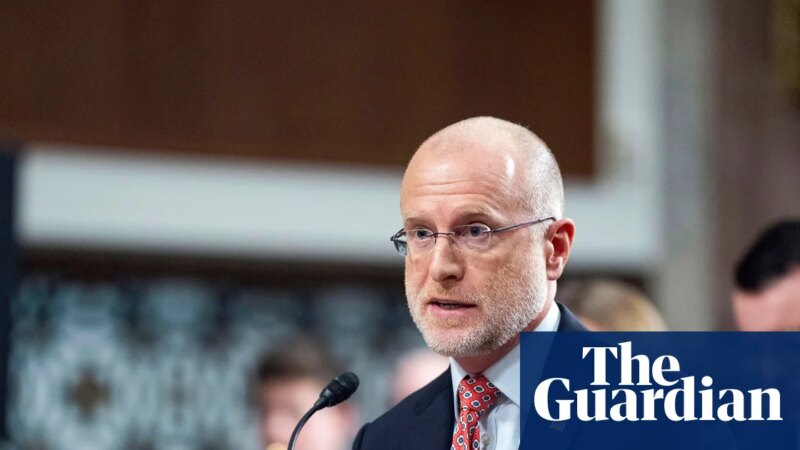
FCC chair Carr to face congressional grilling in wake of Jimmy Kimmel controversy
The Donald Trump-appointed chair of the Federal Communications Commission Brendan Carr will soon make his first appearance before Congress since sparking an uproar with comments seen as pressuring ABC to temporarily pull comedian Jimmy Kimmel from the air.
ABC indefinitely suspended Kimmel’s show over statements he made following the murder of conservative activist Charlie Kirk, which prompted Carr to say that he wanted broadcasters to “take action” on Kimmel, and: “We can do this the easy way or the hard way.”
Though ABC eventually reinstated Kimmel, the episode is sure to be raised when Carr appears before the Senate commerce committee for a hearing that should begin shortly. He will be joined by commissioner Olivia Trusty, a Republican, and Anna Gomez, a Democrat.
Here’s more about Carr:
Jack Smith to make first appearance on Capitol Hill since dropping charges against Trump
Jack Smith, who as justice department special counsel brought two criminal cases against Donald Trump that were scuppered by his re-election win, will be appearing for a behind-closed-door testimony before the House judiciary committee today.
Smith had offered to testify publicly, but the Republican judiciary committee chair Jim Jordan opted to subpoena Smith for a private deposition, in which he will be questioned by lawmakers. That means we won’t know much about what he had to say, but some of the representatives who attend the session may reveal details after the fact. We’ll let you know if we hear anything.
Donald Trump’s White House was shaken on Tuesday after Vanity Fair published a piece based on nearly a dozen interviews with the US president’s chief of staff, Susie Wiles, in which she holds forth in a very candid fashion about the administration’s inner workings. Here’s more on what she said, and why it caused such a stir:
Wiles has given her own, unvarnished thoughts about Trump’s administration, revealing details and opinions that presidential aides usually save for memoirs long after they have left power.
From calling out Pam Bondi, the attorney general, over her handling of the Jeffrey Epstein case, to criticising Elon Musk over the dismantling of the United States Agency for International Development (USAid), Wiles has offered an unusually candid look inside the White House, after maintaining a low profile for much of Trump’s term.
In a series of 11 interviews with author Chris Whipple conducted over Trump’s first year back in office, Wiles, the first woman to serve as White House chief of staff, described the teetotal president as having “an alcoholic’s personality” and an eye for vengeance against perceived enemies.
After the publication of the piece on Tuesday, Wiles called the Vanity Fair story “a disingenuously framed hit piece on me and the finest president, White House staff, and cabinet in history”, saying it omitted important context and selectively quoted her to create a negative narrative. A number of cabinet officials and other aides rushed to her defence – but Wiles notably has not denied any details or quotes.
Donald Trump will today travel to Dover, Delaware to witness the arrival of two US soldiers killed over the weekend in Syria, according to his White House schedule.
This evening at 9pm, the president will make an address to the nation. The White House has not yet specified what that will be about, but chances are it is aimed at reversing the slump in his approval ratings.
There will, in fact, be two war powers resolutions concerning US actions towards Venezuela before the House today.
The chamber is also expected to vote on a measure proposed by Greg Meeks, the top Democrat on the foreign affairs committee, which requires Trump to end hostilities against “presidentially designated terrorist organizations in the Western Hemisphere”, rather than Venezuela specifically.
This one has 40 cosponsors, but all are Democrats.
House to vote on resolution preventing conflict with Venezuela
We will get a sense later in the day on whether the Republican-controlled House of Representatives has any misgivings about Donald Trump’s strategy towards Venezuela, when a war powers resolution intended to halt his escalation against the country comes up for a vote.
Proposed by Democrat James McGovern, the resolution would require the president to remove troops from the country’s vicinity. It has 39 Democratic co-sponsors, and, perhaps crucially, three Republicans: Don Bacon of Nebraska, Thomas Massie of Kentucky and Marjorie Taylor Greene of Georgia. The latter two are not on good terms with the president.
Votes are expected at 5.30pm at the latest, and we will find out if it has the support to pass. When defense secretary Pete Hegseth and secretary of state Marco Rubio briefed lawmakers on the Venezuela strategy on Tuesday, many Republicans said they agreed with the administration’s actions. Here’s more on that:
To take it back to domestic politics for a bit, a Maga loyalist US attorney is expanding an investigation of ex-FBI and intelligence officials who angered Trump with their inquiry into claims Russia helped the US president win in 2016.
This is despite the US justice department suffering stinging recent court rejections of indictments of two foes of the US president.
Former prosecutors and legal experts call the Miami-based inquiry, which has issued some two dozen subpoenas so far, a “fishing expedition”.
The investigation’s apparent focus is to identify ways to criminally charge ex-FBI and intelligence officials who have already been investigated and effectively exonerated by two special counsels and a Republican-led Senate panel, which mounted exhaustive inquiries into Russia’s efforts to boost Trump in 2016.
Led by Jason Reding Quiñones, who is close to attorney general Pam Bondi and other key Maga allies, the inquiry accelerated with a flurry of subpoenas in November and new prosecutors to expedite what has been dubbed a “grand conspiracy” investigation.
Oil prices up 2% after Trump blockade order
The markets are closely watching how such a blockade would actually be imposed.
The price of US crude jumped more than 2% after Trump’s announcement – Brent was up $1.41, or 2.4%, at $60.33 a barrel at 10:18 GMT, while West Texas Intermediate crude rose $1.42, or 2.6%, to $56.69 a barrel.
Oil prices have been at near five-year lows due to progress on Ukraine peace talks; however, the risk to the Venezuelan supply is now driving it up again.
“Venezuelan oil production accounts for around 1% of global output, but supplies are concentrated among a small group of buyers, mainly Chinese teapot refiners, the U.S., and Cuba,” Muyu Xu, senior oil analyst at Kpler told the Associated Press.
Venezuela condemns ‘warmongering threats’ as Trump orders oil blockade
Trump in his Truth Social message didn’t have any detail on how a blockade on sanctioned oil tankers might be enforced, or if he would direct the coast guard to seize vessels like he did last week.
His administration has moved thousands of troops and nearly a dozen warships – including the world’s largest aircraft carrier – to the sea north of Venezuela in the past couple of weeks.
It’s clear the move targeting oil, Venezuela’s main source of income, is aimed at further squeezing Nicolás Maduro’s government.
Venezuela affirmed its sovereignty over all natural resources and its right to free navigation and trade in the Caribbean Sea despite “warmongering threats”, the government said in a statement on Tuesday. It condemned Trump’s “irrational military blockade” order as a “grotesque threat” aimed at “stealing” the country’s wealth.
Good morning and welcome to our US politics blog, I’m Frances Mao taking you through the next few hours.
The immediate focus is on Venezuela after Donald Trump on Tuesday night ordered a “total and complete” blockade of sanctioned oil tankers to and from the country.
Venezuela is home to the world’s largest identified oil reserves, and its economy is reliant on oil. It has accused Washington of trying to steal its resources through “warmongering threats”.
The blockade announcement comes after US officials seized a tanker off the coast last week, the latest escalation in weeks of US naval aggression in the Caribbean.
Trump last night wrote that Venezuela was now “completely surrounded by the largest Armada ever assembled in the History of South America”. He added it would “only get bigger” and “be like nothing they have ever seen before”.